
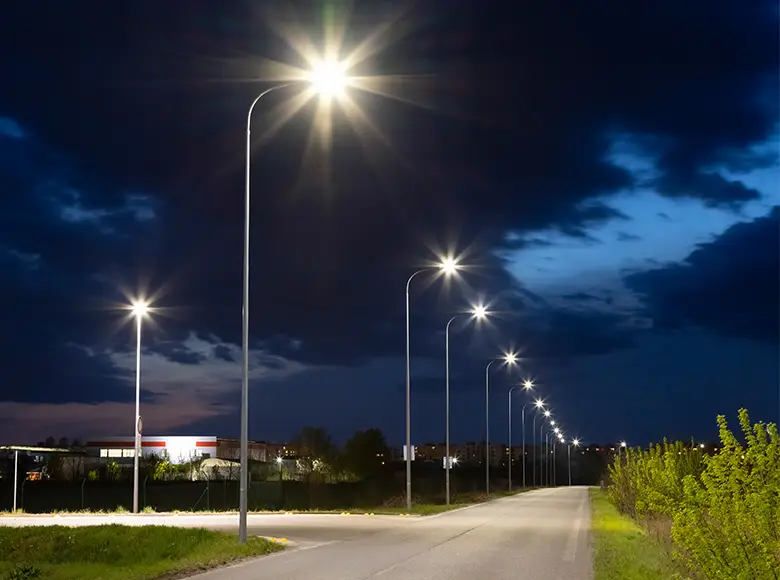
Bright streetlights, often operating at full power, illuminate deserted streets and intersections with no traffic. This seemingly harmless practice leads to a series of problems ranging from massive energy waste that significantly impacts municipal budgets to light pollution.
Energy Waste and Light Pollution
Excessive street lighting leads to significant energy waste and an increase in energy costs for cities. This not only represents a waste of public funds but also has a negative environmental impact, with increased greenhouse gas emissions.
Excessive lighting also contributes to light pollution, which has harmful effects on nocturnal wildlife, human health, and the visibility of the starry sky. This phenomenon can particularly interfere with the human circadian rhythm and cause sleep disturbances.
Uncontrolled use of public light thus constitutes an element of environmental degradation and waste of energy resources, from the energy needed to power them to the wear on materials used for lamp production.
Adaptive lighting: the solution to the problem of overlit streets
Adaptive lighting is regulated by lighting standards (UNI 11248) as a solution to tackle the problem of overlit streets. This standard not only reduces energy waste and light pollution but also helps improve road safety by preventing lighting control systems from operating disconnected from actual traffic trends. The increasing commitment required by global challenges to safeguard the planet demands maximizing energy efficiency and the sustainability of human-designed technologies; in this context, adaptive lighting is becoming a key element in creating smarter and more sustainable cities for the future.
Excessive lighting also contributes to light pollution, which has harmful effects on nocturnal wildlife, human health, and the visibility of the starry sky. This phenomenon can interfere with the human circadian rhythm and cause sleep disturbances.
Unregulated use of public light thus constitutes an element of environmental degradation and waste of energy resources, from the energy needed to power them to the wear on materials used for lamp production.