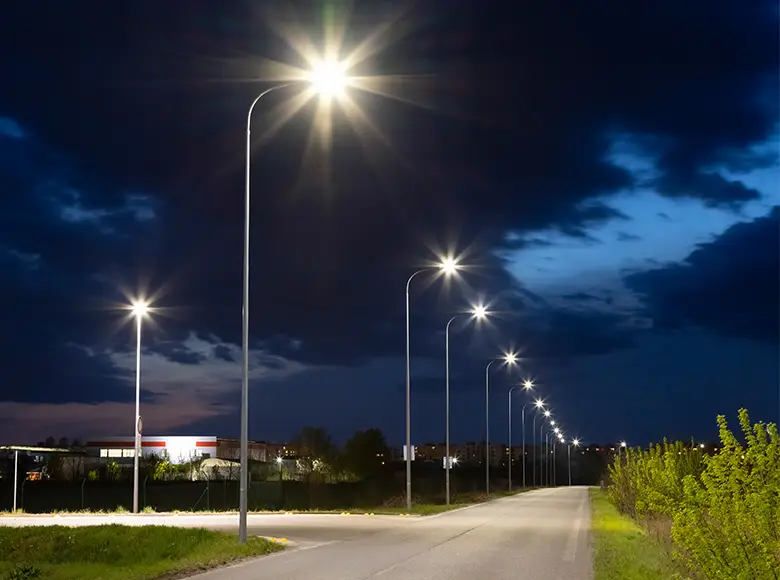

The revolution in energy efficiency and quality of life
Public lighting is a fundamental element for safety, mobility, and quality of life in our cities. However, its importance and potential impact on the environment and human health are often underestimated. Adaptive public lighting represents a standardized solution that allows improving both energy efficiency and the quality of lighting in our communities.
What is adaptive public lighting?
Adaptive public lighting is a method of regulating the intensity of streetlamps that is standardized at the national (UNI 11248) and European (EN 13201) levels. It allows the adaptive adjustment of streetlamps intensity based on the recognition and quantification of vehicle traffic.
Therefore, the lighting system must be intelligent, meaning connected or “smart” to receive information from sensor systems that recognize actual traffic conditions, such as cameras or others. This means that streetlights need an LCS (Lighting Control System) that communicates with external sensors, or in the case of TRAILS, that integrates sensors internally.
With adaptive lighting, streetlights can vary their brightness in response to factors such as traffic and weather conditions at every predetermined time interval (e.g., 10 minutes). This mechanism allows maximizing energy efficiency, minimizing energy waste and greenhouse gas emissions.
Excessive lighting also contributes to light pollution, which has harmful effects on nocturnal wildlife, human health, and the visibility of the starry sky. This phenomenon can interfere with the human circadian rhythm and cause sleep disturbances.
The excessive use of public lighting contributes to the rapid degradation of natural resources, including materials used for lamp production and the energy needed to power them.
The advantages of adaptive public lighting
Energy saving: One of the main advantages of using adaptive public lighting is the considerable energy saving. Lights can operate at full power only when needed, significantly reducing energy consumption and associated costs.
Reduction of light pollution: Unregulated public lighting, especially those using LED, significantly contributes to light pollution on our planet, which has negative effects on human health and night sky observation. Adaptive public lighting allows the light emitted upwards to be reduced and concentrates light where it is needed, preserving the nocturnal environment and saving energy.
Improvement of road safety: Unlike non-standardized light flux regulation techniques, adaptive lighting improves road safety. Roads become brighter when there is traffic or adverse weather conditions, reducing the risk of road accidents.
Increased quality of life: Adequate lighting contributes to making streets and public spaces more welcoming and inviting for residents and visitors, improving the quality of life in cities.